
Sensitivity as a Trainable Skill
How attention to muscular sensation develops body awareness, proprioception, and perceptual skills that build across every domain
Section titled “How attention to muscular sensation develops body awareness, proprioception, and perceptual skills that build across every domain”Patrick Oancia
WordPress Metadata
Section titled “WordPress Metadata”Excerpt: Most physical practice is oriented outward — what the practice looks like, what it accomplishes. The internal experience of doing the movement is rarely on the curriculum. This article describes the skill of attending inward, beginning with muscular sensation at rest, and how that sensitivity carries into every domain that depends on noticing what isn’t asking to be noticed.
SEOPress Title: Sensitivity as a Trainable Skill: Body Awareness, Proprioception & Perceptual Skill SEOPress Description: How attention to muscular sensation develops body awareness, proprioception, and perceptual skills that build across every domain. By Patrick Oancia.
Categories: Body Awareness, Movement & Cognition Tags: Body Awareness, Proprioception, Sensorimotor Learning, Baseworks Method, Inner Attention, Muscular Sensation, Perceptual Resolution, Attentional Carryover, Sensitivity
Featured Image
Section titled “Featured Image”Title: Sensitivity as a Trainable Skill — Article Banner (with title overlay)
Alt text: Article banner for Sensitivity as a Trainable Skill by Patrick Oancia
CDN: https://media.baseworks.com/blog-articles/sensitivity-as-a-trainable-skill/baseworks-sensitivity-as-a-trainable-skill-featured.webp
Hero Image (ACF article_image)
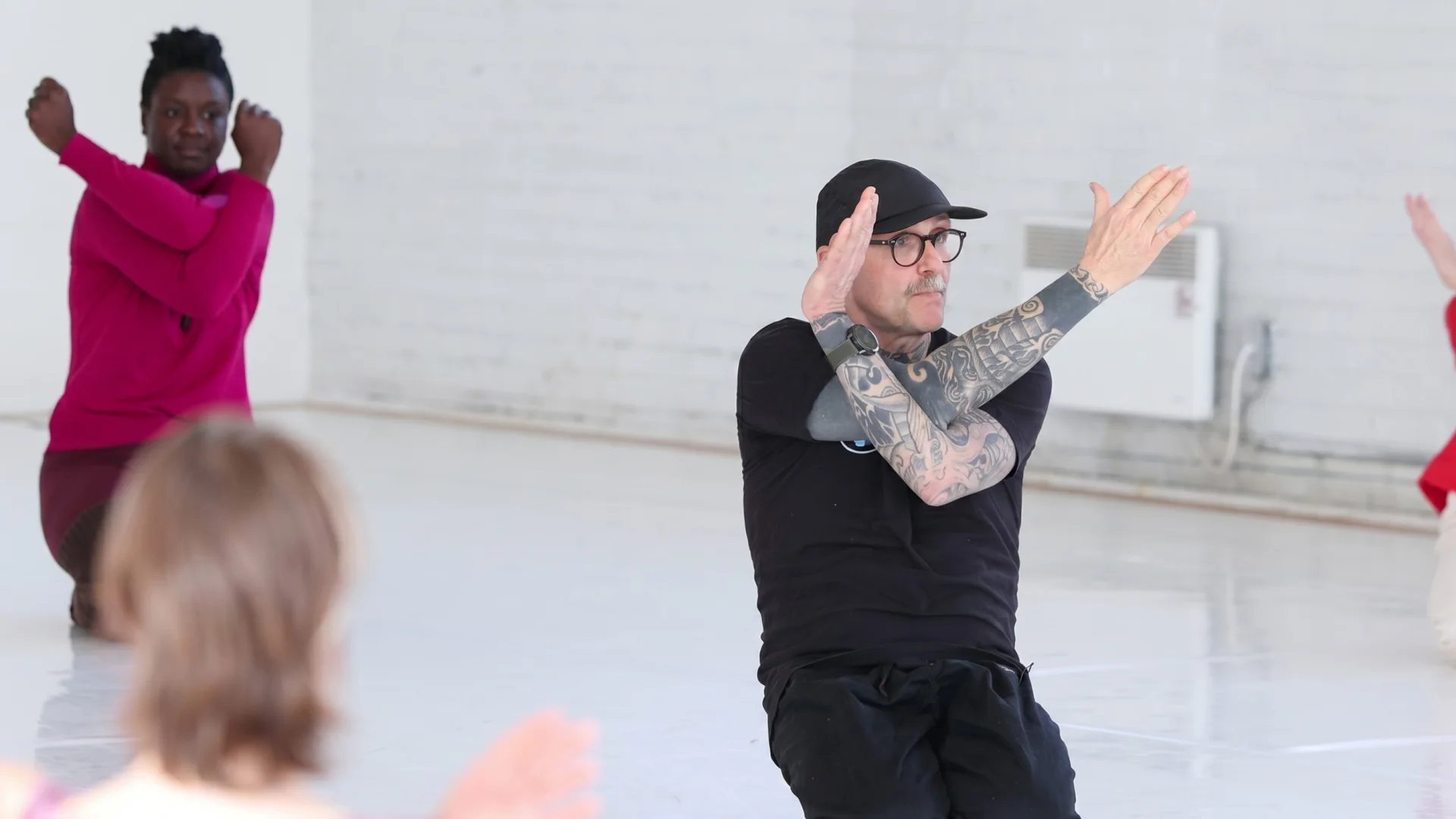
Section titled “Hero Image (ACF article_image)”Title: Sensitivity as a Trainable Skill — Studio Practice Banner (no overlay)
Alt text: Patrick Oancia in a Baseworks studio session, kneeling with arms crossed at face level in a Star form, two practitioners in foreground/background
CDN: https://media.baseworks.com/blog-articles/sensitivity-as-a-trainable-skill/baseworks-sensitivity-as-a-trainable-skill-banner.webp
In-Post Infographic (between “How that sensitivity builds across domains” intro and the developer example)
Section titled “In-Post Infographic (between “How that sensitivity builds across domains” intro and the developer example)”Title: Attentional Carryover — Radial Infographic
Alt text: Attentional carryover: a radial diagram with five domains — developer, CEO, teacher, farmer, forester — connected by hairlines to a central cyan circle representing the shared skill of sustained attention
CDN (WebP): https://media.baseworks.com/blog-articles/sensitivity-as-a-trainable-skill/baseworks-sensitivity-as-a-trainable-skill-attentional-carryover.webp
CDN (PNG fallback): https://media.baseworks.com/blog-articles/sensitivity-as-a-trainable-skill/baseworks-sensitivity-as-a-trainable-skill-attentional-carryover.png
Source SVG (archive only): originals/baseworks-sensitivity-as-a-trainable-skill-attentional-carryover-original.svg on the NAS — 16:9, scales cleanly. PNG/WebP rendered from this via rsvg-convert at 1920×1080.
What I keep noticing across disciplines
Section titled “What I keep noticing across disciplines”I’ve dedicated a lot of time to learning different skills throughout my life. It started with sports and continued through music and other disciplines that all demanded a lot of focus. In parallel, I’ve worked directly with thousands of people in person at our studio in Tokyo and workshops in other countries. Across everything, one observation has stayed consistent in a way that’s always been obvious. Most people doing physical practices are focused on what it looks like. The body becomes something to manage from the outside, tracked through what the practice visually presents, what it accomplishes, what the aesthetic result of the effort is. The shape, the achievement, the thing you can point at. What’s actually happening internally sits in the background or doesn’t register at all.
The pull toward the visual is reinforced almost everywhere. Open Instagram or TikTok and a substantial portion of what circulates is physical performance eye candy. Fit and agile bodies. Skills executed at a fast pace. The internal experience of what the person feels like from the inside isn’t part of what gets shared, because it can’t be photographed. The visible has gravity, and more often than not shapes both what people look for in a practice and what they consider to be valid.
This isn’t a critique of physical practice. The forms of activity that emphasize visible outcomes have value. What I’m pointing at is a quieter observation that becomes harder to ignore the longer you spend in a teacher/practitioner type of collaboration. The focus on internalization is rarely included in a meaningful enough way in the structure of most pedagogical environments. There’s no obvious reason it would be. Strength, flexibility, and technique all produce results that someone else can see. Inner attention doesn’t. It doesn’t show up in a photograph, and it doesn’t translate into the categories most physical practice is organized around. So it gets left out, even by disciplines that respect what it means.
If you want to test what internalizing sensations feels like, there’s a useful place to begin that most people have never checked.
A muscle at rest, and the vocabulary problem
Section titled “A muscle at rest, and the vocabulary problem”What does a muscle feel like from the inside, when nothing is happening to it?
Not when it’s sore. Not when it’s stretched. Not when it’s burning from effort. Not when it’s loaded. Just at rest. Sitting there. What’s the sensation?
For most people, the honest answer is nothing. The signal isn’t absent. The attention to detect it hasn’t been built. Muscular sensation at rest is a perceptual territory that almost no part of mainstream movement education touches, and the result is that an entire layer of internal information sits unused in most people’s experience of their own body until they die.
Look at the words available for muscular sensation. Sore. Tight. Stretched. Burning. Cramped. Fatigued. Each of them describes some event the muscle is responding to. For many, the sensory vocabulary for muscles is entirely event-based. If nothing is happening, there’s no word for what’s there. The vocabulary problem and the perceptual problem reinforce each other. Without the vocabulary, there’s no attention on it. Without attention on it, no language develops.
This is a perceptual blind spot, not an absence. Over time, some people find a quiet, neutral presence that was there all along. In her research, Asia Shcherbakova has been calling this the hum: a low-grade tonic sensation present in resting muscles, intensifying proportionally with even mild contraction. It’s a perceptual finding that sits outside existing scientific frameworks. That’s why it’s mostly unnamed in the literature she’s been investigating for several years.
The hum, or whatever you find when you check, becomes available only when inner attention has somewhere to show up. The first time, most people find silence. Over time, the silence starts to fill in.
Sensitivity is what’s actually being trained
Section titled “Sensitivity is what’s actually being trained”A muscle at rest is the most overlooked place to start. The signal is so subtle that almost nothing else in daily life prompts you to look for it. There’s no soreness to manage, no stretch to lean into, no burning to outlast. The only way the signal becomes available is through sustained attention, without any external reward.
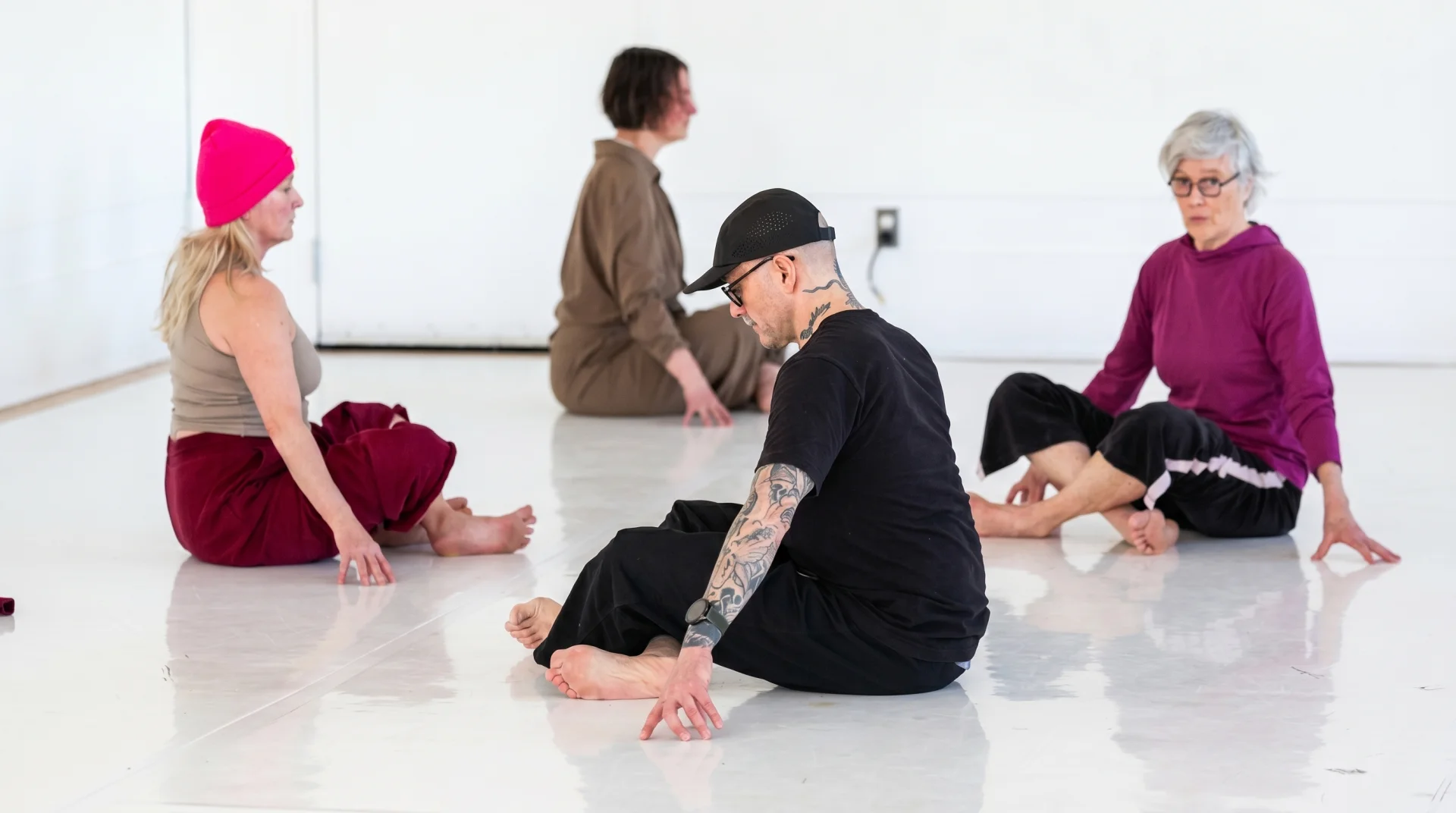
Internalizing this attention is the actual skill. The muscle is its training ground.
What develops over time is what we call perceptual resolution: a finer-grained capacity to detect distinct internal sensations and hold attention on them long enough for something to register. The perception-gap makes a parallel case from a slightly different angle, framing it as sensory resolution that develops through structured practice. The two ideas describe the same underlying capacity from different sides. Perceptual resolution is what changes. Inner attention is what builds it.
Two specific techniques in Baseworks generate the sensory information this kind of attention can work with. Micro-Movements, the subtle positional adjustments used as calibration mechanisms, keep the body engaged with continuous internal signals. Distributed Activation, the simultaneous isometric engagement of multiple muscles in conscious co-contraction, amplifies proprioceptive input across the body at once. Both are structured ways of internalizing attention.
These techniques allow attention to be developed deliberately, over time, in a domain where the signal is subtle, the feedback is internal, and nothing external rewards you for paying attention. A capacity built without external reward is one that doesn’t depend on external reward to be applied later, in any other domain.
How that sensitivity builds across domains
Section titled “How that sensitivity builds across domains”The capacity being trained doesn’t stay confined to the body. It carries. There’s a good term for this: attentional carryover. A perceptual skill developed deliberately enough in any domain becomes accessible in others.
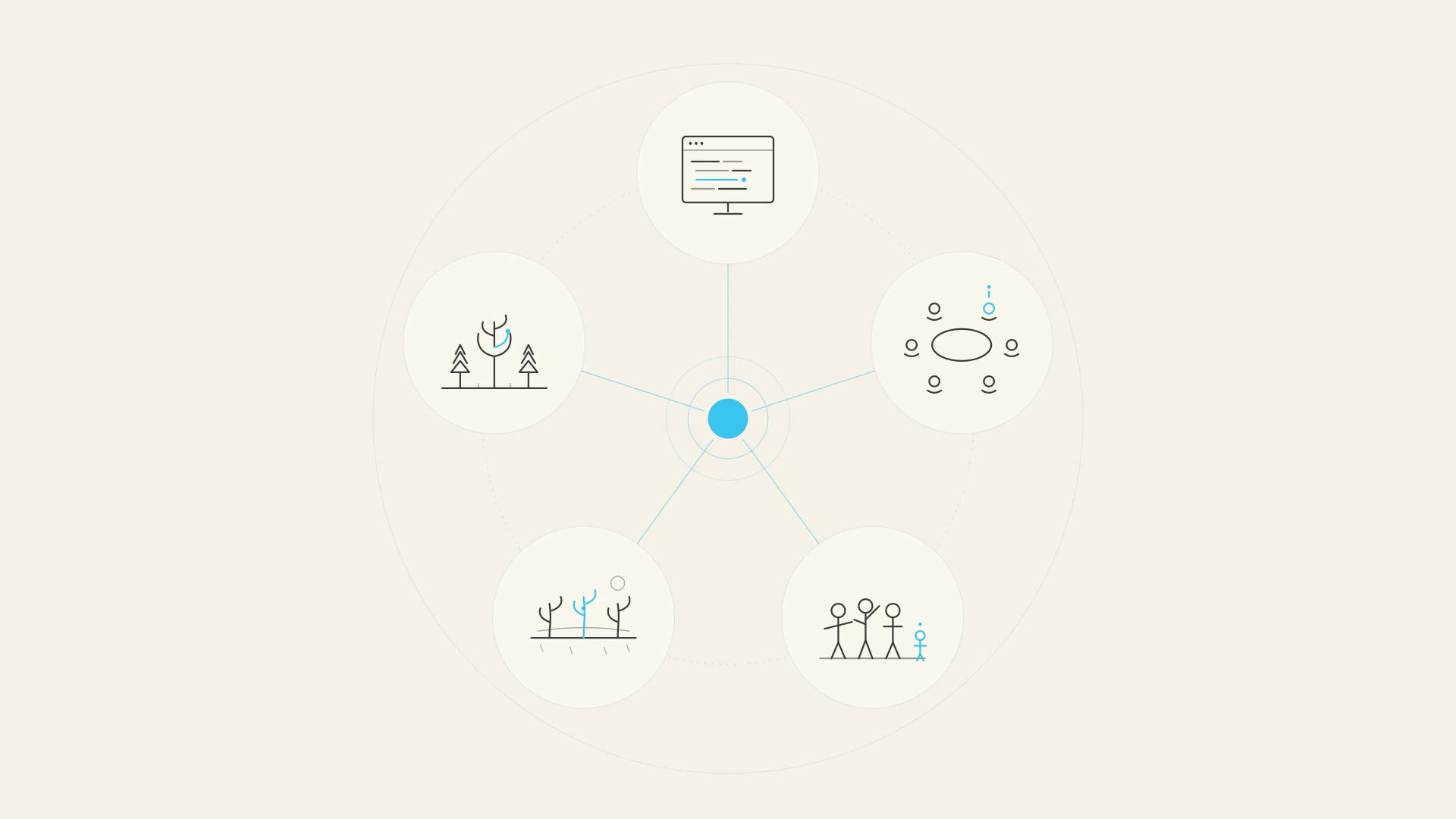
A software developer reads code more carefully, catching the small inconsistency that would have become a bug. Knowledge of the codebase isn’t usually what makes the difference between catching it and missing it. The difference is whether attention stays on a passage that doesn’t look like it needs scrutiny on first read.
A CEO senses temperature in a room before deciding how to open a meeting. The information was available to everyone present. The attentional capacity to register and use it is what separates the decision that makes itself obvious from the one that misfires.
A preschool teacher notices which child has gone quiet in a way that’s different from yesterday. Nothing obvious has happened. The signal is small enough to miss, and missing it has consequences that a stronger external cue would have prevented.
A farmer reads the soil and the weather and the look of a crop as a single ongoing pattern, not a checklist. The early indication of a problem is rarely a single event. It’s a slight shift in something easy to overlook, picked up by a person whose attention has been trained over years to register changes most people would walk past.
A forester picks up the early signs of a tree under stress before they’re obvious to anyone else. The skill isn’t taxonomic knowledge alone. It’s the capacity to keep noticing.
These are all instances of the same underlying skill. Sustained attention on signals that aren’t shouting for it. Most of what matters in any field sits in that category. The obvious things take care of themselves. The subtle ones need someone whose perceptual range has been trained to notice them. And there are very few domains in modern life that train this kind of attention deliberately. Physical education, when it’s oriented toward inner attention rather than external outcome, is one of them.
The science underneath
Section titled “The science underneath”The experiential side of this work is what I’ve laid out here. There’s a research side as well, and that’s where Asia Shcherbakova comes in. We met in Tokyo in 2015. After her first month of practicing with us at the studio, she agreed to join the team as a research associate, with the role of mapping the outcomes of Baseworks onto the natural sciences. Since then, her contributions have included research, the creation of educational materials, and a number of articles that connect the practice to the underlying science. One of those articles, The Mystery of Proprioceptive Awareness, covers the neural mechanisms behind muscular sensation at rest, the original survey data showing how widespread this perceptual phenomenon is across practitioners, and the structural reasons it has gone largely unnamed in existing scientific literature on proprioception.
If you’d like to dig a bit deeper into the concepts and research in person, there are two upcoming opportunities:
- May 11, 2026, Montreal. Asia presents at the 27th Neuropsychology Day at The Neuro (Montreal Neurological Institute). Her talk is on degrees-of-freedom control and predictable failure patterns in non-habitual movement. Free and open to the public.
- June 8 to 9, 2026, Padova, Italy. We’re presenting related research at BRNet 2026, to the body representation research community.
To experience the practice itself in person, our events page lists upcoming sessions, and the Primer program is the structured entry point for working with the method.
Related
Section titled “Related”- The Mystery of Proprioceptive Awareness — Asia’s research-grade companion piece
- What You Can’t Feel, You Can’t Change — Patrick’s earlier piece on sensory resolution as the bottleneck
- What Does a Muscle Feel Like from Inside? — Brain Fodder seed (April 9, 2026 newsletter) that this article expands
- Four years deeper into a mystery — newsletter where the seed Brain Fodder appeared
- Baseworks at Neuropsychology Day 2026 — Asia’s May 11 presentation at The Neuro
- BRNet 2026 — Padova, June 8–9
- Proprioceptive Awareness — core concept
- Distributed Activation — referenced technique
- Micro Movements — referenced technique
- 3 Types of Body Awareness — framework introduced at BRNet
- _blog-index — blog articles index
Draft Notes
Section titled “Draft Notes”Status: Round 5 — clean copy, 2026-04-22. All red font stripped (changes accepted); “esthetic” → “aesthetic” applied per Patrick’s note. Body voice-clean and ready for photo selection and WordPress publishing. Author: Patrick Oancia Word count: ~1,300
Source material:
- Brain Fodder “What does a muscle feel like from inside?” (April 9, 2026 newsletter) — original seed
- what-does-a-muscle-feel-like-from-inside — earlier draft outline file (this article supersedes it)
- 2022-02-mystery-of-proprioceptive-awareness — Asia’s scientific article (cross-link target, source of “the hum”)
- 2026-03-perception-gap-body-awareness — Patrick’s adjacent earlier article (cross-link target, source of “sensory resolution” parallel)
- Patrick’s voice + KB conventions (memory and voice guides)
Terminology real-estate strategy (deliberate, per advisor):
- New terms introduced and italicized at first use, then reinforced: muscular sensation at rest, sensory vocabulary, perceptual resolution, inner attention (also in subtitle, used 6+ times verbatim), attentional carryover
- Baseworks-owned terms reinforced by exact name: Micro-Movements, Distributed Activation, Proprioceptive Awareness, “the hum”
- Avoided as branded framing (crowded by adjacent modalities): embodiment, mindful movement, somatic
- The intent is to start building Baseworks as the source-of-truth for these terms over time, across multiple articles
Outstanding (in order):
- Patrick editorial pass (in-progress)
- Voice/terminology revision based on edits
- Photo selection and compression
- Upload to WordPress media library
- Create draft article on baseworks.com via
/publish-article - Set categories, tags, SEOPress meta, ACF fields
- Patrick final review and voice check on staged WordPress draft
- Verify all URLs are live before publication
- Add inbox item for Asia (cross-domain audience: McGill / BRNet community)
Open question for Patrick:
- Should we add an inbox item proposing a separate scoping task for a terminology real-estate map in
voice-guides/(a tracker of which Baseworks terms are owned vs. crowded vs. open territory worth claiming)? Asia probably wants to weigh in given she’s mining the proprioception literature.
Editorial Notes
Section titled “Editorial Notes”2026-04-22 — First draft generated
- Drafted by Claude Code on Patrick’s Mac in conversation with Patrick. Title, subtitle, section outline, opening paragraph, voice rhythm, and terminology targets agreed iteratively before drafting. Body written in one pass against locked parameters. Cross-referenced against 2026-03-perception-gap-body-awareness and 2022-02-mystery-of-proprioceptive-awareness to ensure distinct territory. Voice-checked against unified guide + Patrick’s guide (no em dashes, contractions throughout, no contrastive AI defaults, no “embodiment / mindful movement / somatic / fitness / coaching / transform” framing).
Round 2 revision (2026-04-22)
Section titled “Round 2 revision (2026-04-22)”- Reviewer: Patrick Oancia (in-file edits) + Claude Code on Patrick’s Mac (subsequent voice/principle pass)
- Patrick’s in-file edits (preserved): Tightened sentence rhythm in section 1; reframed several phrasings (“oriented outward” → “focused on what it looks like”; “valuable” / “valid”; “movement practice” → “physical education”); added darker close to muscular sensation at rest sentence (“until they die”); shortened forester closing; replaced “lands” metaphor in CEO line (“the decision that makes itself obvious”); added personal context paragraph about Asia’s joining the team in 2015 in section 5; flagged closing line as repetitive; flagged Micro-Movements paragraph and opening sentence as too long.
- Claude voice/principle pass (red font marks all changes):
- Section 1: Broke the long second sentence into two; fixed typos (“on the internally” → “internally”; “in a fast pace” → “at a fast pace”; “what the person is feels like from the inside, isn’t” → “what the person feels like from the inside isn’t”).
- Section 2: Tightened “some people eventually find” → “some people find”; collapsed “It isn’t a figure of speech. It’s a perceptual finding…” into a single positive statement; cut the “For the purposes of this article, the point is simpler” scaffolding opener.
- Section 3: Joined the fragment “A muscle at rest is the most overlooked place to start Which is why its useful” into a single grammatical sentence; rewrote the Micro-Movements paragraph to fix the fragment, parallelism, and typos (calibratioin → calibration; mechanizms → mechanisms; mucles → muscles); cut redundant “That last part matters” sentence.
- Section 4: Removed two stray commas (comma splice in section opener); rewrote the developer example for clarity per Patrick’s flag — clearer mechanism (knowledge isn’t the differentiator; sustained attention to a passage that doesn’t visibly need scrutiny is).
- Section 5: Rewrote Patrick’s Asia-joining paragraph in the article’s voice rhythm; clarified that The Mystery of Proprioceptive Awareness is one of her articles, not her only one (“a number of articles that connect the practice to the underlying science… One of those articles…”); fixed typos (“dig in a bit deeper” → “dig a bit deeper”; “in person’” → “in person”; “there two” → “there are two”); added hyperlinks for events page and Primer program; cut the closing “they sit next to each other on purpose” line per Patrick’s note (the experiential-vs-research framing is now established at the top of section 5 by the Asia paragraph, so the closing was redundant).
- Patterns extracted from Patrick’s edits and applied throughout (also added to voice guides):
- Drop appositive clauses that don’t add information (“X, one that Y, Z” → “X that Y Z”).
- Eliminate “land / lands / land on” as a metaphor for attention or arrival; use direct verbs (show up, register, form, develop).
- Cut negative-referencing openers (“X isn’t Y. The thing is Z” → just say what it is).
- Tighten emphasizers and intensifiers (“more than it sounds,” “real value,” “actually” where redundant).
- Voice guide updates pending: Two new entries proposed for
VOICE-GUIDE-UNIFIED.md(the “land” metaphor ban and the appositive-clause pattern). Patrick to approve before incorporation perVOICE-GUIDE-GOVERNANCE.md.
Round 3 revision (2026-04-22)
Section titled “Round 3 revision (2026-04-22)”- Reviewer: Patrick Oancia (in-file edits and comments) + Claude Code on Patrick’s Mac (response pass)
- Patrick’s in-file changes (preserved): Tightened the opening practitioner-count sentence further (cut “well over ten thousand at this point” → “thousands of people in person at our studio…”); replaced “pedagogical structures” with “pedagogical environments” to fix the awkward repetition; rewrote the section 2 vocabulary lines to remove the remaining “lands on” instance (“Without the vocabulary, there’s no attention on it. Without attention on it, no language develops.”); split the section 4 closing into two sentences (“…to notice them. And there are very few domains…”); struck through “which is why it’s useful” in section 3; struck through the cross-link sentence in the Micro-Movements paragraph (his note: section 5 already references The Mystery of Proprioceptive Awareness, so the earlier mention is redundant); struck through “Practice” in “Baseworks Practice onto the natural sciences” (preferred just “Baseworks” in that spot); flagged the section 2 “perceptual finding” sentence as one that could be made simpler.
- Claude response pass (red font marks Round 2 + Round 3 changes — Round 3 changes overlay where applicable):
- Section 1: Closed the trailing space before period in “teacher/practitioner type of collaboration”; closed double-spaces in “even by disciplines” and “what it means.”
- Section 2: Simplified the long compound sentence per Patrick’s flag — “It’s a perceptual finding that sits outside what existing scientific frameworks have made room for, which is why it’s mostly unnamed in the literature she’s spent the last several years investigating” → “It’s a perceptual finding that sits outside existing scientific frameworks. That’s why it’s mostly unnamed in the literature she’s been investigating for several years.” Removed the inline comment.
- Section 3: Removed the struck-through “which is why it’s useful” closing; removed the struck-through cross-link clause in the Micro-Movements paragraph; moved the perception-gap link inline to where the article is named in the preceding paragraph (preserves the cross-link for SEO and readers without duplicating Asia’s article reference).
- Section 5: Removed the struck-through “Practice” — final reads “the outcomes of Baseworks onto the natural sciences.”
- Capitalization rule (reinforced from voice guide v1.9): When “Practice” follows “Baseworks” as a compound noun, capitalize the P (“Baseworks Practice”). The word “Baseworks” alone is preferred where the compound is unnecessary. Memory pointer added so future drafts catch this at generation time.
- On the “land/lands” ban: Patrick confirmed the v2.7 voice guide rule in this round and clarified the spirit — “It’s just not good to use the goddamn thing everywhere.” The remaining single instance preserved earlier in section 2 has now been removed by Patrick’s edit, so the article is clean of the metaphor.
Round 4 revision (2026-04-22)
Section titled “Round 4 revision (2026-04-22)”- Patrick’s in-file changes (preserved): Final tightening pass on the opening line (cut “and across workshops and events in other countries” → “and workshops in other countries”); shortened the perception-gap link text from “[The perception-gap article]” to “[The perception-gap]” inline; restructured the developer-example closing sentence to put “on first read” at the end (“a passage that doesn’t look like it needs scrutiny on first read”) instead of as a parenthetical mid-sentence.
- Claude small flags (red font): Two minor consistency proposals offered for Patrick’s accept/revert.
- Section 3: “Internalising” → “Internalizing” (American spelling per voice guide v2.1).
- Section 4: Dropped the soft intensifier “actually” in “Most of what actually matters in any field” → “Most of what matters in any field” (per voice guide guidance against intensifiers that don’t change meaning).
Round 5 — clean copy (2026-04-22)
Section titled “Round 5 — clean copy (2026-04-22)”- All red font tags stripped — Patrick accepted both R4 flags and all earlier red-marked changes from R2 + R3.
- “esthetic” → “aesthetic” in section 1 per Patrick’s note.
- Section 5 framing confirmed: Patrick chose to drop “Practice” entirely from “Baseworks Practice onto the natural sciences” — the line now reads “the outcomes of Baseworks onto the natural sciences,” covering the broader work in its entirety rather than narrowing to one named module.
- Status: Body is voice-clean against unified guide v2.7 draft + Patrick’s guide. Ready for photo selection, WordPress draft, and newsletter draft.
Round 6 — media added (2026-04-22)
Section titled “Round 6 — media added (2026-04-22)”- Featured image (with title overlay, social/OG card) compressed from Patrick’s PNG → 1200×630 WebP + JPG, uploaded to CDN at
media.baseworks.com/blog-articles/sensitivity-as-a-trainable-skill/baseworks-sensitivity-as-a-trainable-skill-featured.{webp,jpg}. - Banner/hero image (clean studio shot of Patrick in Star form) compressed → 1920×1080 WebP + JPG, uploaded to CDN. Embedded inline at the top of the body via markdown
. - Attentional Carryover infographic built from the design bundle (
infographic-for-new-articlefrom claude.ai/design, variation 3 — radial). Patrick selected this variation. Implemented as: source SVG → PNG (via rsvg-convert at 1920×1080 for sharp stroke rendering) → WebP. Uploaded to CDN. Embedded inline in section “How that sensitivity builds across domains” between the section opener and the first domain example. Originally drafted as inline SVG (per the vault memory rule), but Patrick called it: PNG/WebP is more portable inside WordPress, so the inline-SVG block was removed in favor of the standard markdown image embed. - All five domain illustrations rendered correctly: developer (code window with cyan-flagged line), CEO (table with figures, one cyan), teacher (children with one cyan quiet child), farmer (crops with one cyan stressed plant), forester (trees with one cyan stressed branch).
- Source SVG archived to NAS at
originals/baseworks-sensitivity-as-a-trainable-skill-attentional-carryover-original.svgfor future re-rendering if needed.
日本語版 — Japanese Translation
Section titled “日本語版 — Japanese Translation”感知性という訓練できるスキル
サブタイトル
Section titled “サブタイトル”筋感覚への注意が、身体認識、固有受容感覚、そしてあらゆる領域で発達する知覚スキルをどのように育てるか
各分野を通じて気づき続けること
Section titled “各分野を通じて気づき続けること”私は生涯にわたってさまざまなスキルの習得に多くの時間を費やしてきた。スポーツから始まり、音楽や他の分野へと続き、いずれも多くの集中力を要するものだった。並行して、東京のスタジオやワークショップを通じて、何千人もの人々と直接向き合ってきた。そのすべてを通じて、一つの観察が常に一貫して——つねに明らかなかたちで——印象に残り続けている。身体的な実践をしている多くの人は、それがどのように見えるかに焦点を当てている。身体は外側から管理するものとなり、実践が視覚的に提示するもの、達成したこと、努力の美的な結果を通して追跡される。形、達成、指し示せるもの。内側で実際に何が起きているかは背景に退くか、まったく認識されない。
視覚的なものへの引力はほぼあらゆる場所で強化されている。InstagramやTikTokを開けば、流通するコンテンツのかなりの部分が身体パフォーマンスの映像だ。フィットで俊敏な身体。速いペースで実行されるスキル。その人が内側からどのように感じているかという体験は、写真に撮れないので共有されることがない。視覚的なものには引力があり、多くの場合、人々が実践に求めるものと有効と見なすものの両方を形作る。
これは身体的実践への批判ではない。目に見える成果を重視する活動の形態には価値がある。私が指摘しているのは、指導者と実践者のかかわりの中で時間を費やせば費やすほど無視しにくくなる、静かな観察だ。内在化への注意は、ほとんどの教育環境の構造の中で、十分に意味のある形で含まれることがほとんどない。そうなる明らかな理由はない。筋力、柔軟性、技術はすべて、他者が見ることのできる結果を生む。内的注意はそうではない。写真には映らず、ほとんどの身体実践が組織化されているカテゴリーには変換されない。だからこそ、その意味を尊重する分野においてさえ、それが抜け落ちてしまう。
感覚を内在化するとはどのようなことかを試したいなら、ほとんどの人が一度も確認したことのない、有用な出発点がある。
安静時の筋肉と語彙の問題
Section titled “安静時の筋肉と語彙の問題”内側から感じたとき、筋肉は何もしていない状態でどのように感じられるか?
筋肉痛のときではない。ストレッチされているときでもない。努力から燃えているときでもない。負荷がかかっているときでもない。ただ安静にしている。そこにある。その感覚は何か?
ほとんどの人にとって、正直な答えは「何も感じない」だ。信号が不在なのではない。それを検出する注意が構築されていないのだ。安静時の筋感覚は、主流の運動教育のほぼどの部分も触れることのない知覚の領域であり、その結果として、内的情報の一層全体が、ほとんどの人が死ぬまで未使用のまま、自分の身体の体験の中に眠り続ける。
筋感覚に使える言葉を見てみよう。痛い。硬い。伸びている。燃えるような感覚。けいれん。疲労している。これらはそれぞれ、筋肉が反応している何らかの出来事を描写している。多くの人にとって、筋肉の感覚語彙は完全に出来事ベースだ。何も起きていないとき、そこにあるものを表す言葉がない。語彙の問題と知覚の問題は互いを強化し合う。語彙がなければ、注意が向かない。注意が向かなければ、言語は発達しない。
これは知覚的盲点であり、不在ではない。時間をかけて、一部の人々はずっとそこにあった静かで中立的な存在を見つける。Asia Shcherbakovaの研究では、これをハムと呼んでいる——安静時の筋肉に存在する低レベルのトニック感覚で、わずかな収縮でも比例して強まる。これは既存の科学的枠組みの外に位置する知覚的発見だ。だからこそ、彼女が数年間調査してきた文献のほとんどで名前がつけられていない。
ハムは——または確認したときに見つけるものは何であれ——内的注意が現れる場所を持ったときにのみ利用可能になる。最初は、ほとんどの人が沈黙を見つける。時間をかけて、その沈黙は埋まり始める。
実際に訓練されているのは感知力だ
Section titled “実際に訓練されているのは感知力だ”安静時の筋肉は、最も見落とされている出発点だ。信号はあまりにも微妙で、日常生活のほぼ何もそれを探すよう促さない。管理すべき筋肉痛もなく、傾くべきストレッチもなく、耐えるべき燃焼感もない。信号が利用可能になる唯一の方法は、外的な報酬なしに、持続的な注意を通してだ。
この注意を内在化することが実際のスキルだ。筋肉はその訓練の場だ。
時間をかけて発達するのは、私たちが知覚的解像度と呼ぶものだ——明確な内的感覚を検出し、何かが登録されるのに十分な時間、その上に注意を保持する、より細かな能力。知覚ギャップは少し異なる角度から並行したケースを提示し、構造化された実践を通じて発達する感覚解像度としてそれを組み立てる。この二つのアイデアは異なる側面から同じ基礎的な能力を描写している。変化するのは知覚的解像度だ。それを構築するのが内的注意だ。
Baseworksにおける二つの特定の技術が、この種の注意が働くことのできる感覚情報を生成する。ミクロの動き(Micro-Movements)——キャリブレーションメカニズムとして使用される微妙な位置調整——は、継続的な内的信号とともに身体の関与を維持する。分散活性化(Distributed Activation)——意識的な共収縮における複数の筋肉の同時等尺性収縮——は、一度に身体全体にわたって固有受容感覚入力を増幅する。どちらも注意を内在化する構造化された方法だ。
これらの技術によって、信号が微妙で、フィードバックが内的で、注意を払っても外的に何も報いてくれない領域において、注意を意図的に、時間をかけて発達させることができる。外的報酬なしに構築された能力は、後でどの領域においても適用されるために外的報酬に依存しない。
感知力がさまざまな領域でどのように発達するか
Section titled “感知力がさまざまな領域でどのように発達するか”訓練されている能力は身体に限定されない。それは持ち越される。これを表す良い用語がある——注意の転移(attentional carryover)。十分に意図的に発達させた知覚スキルは、他の領域でも利用可能になる。
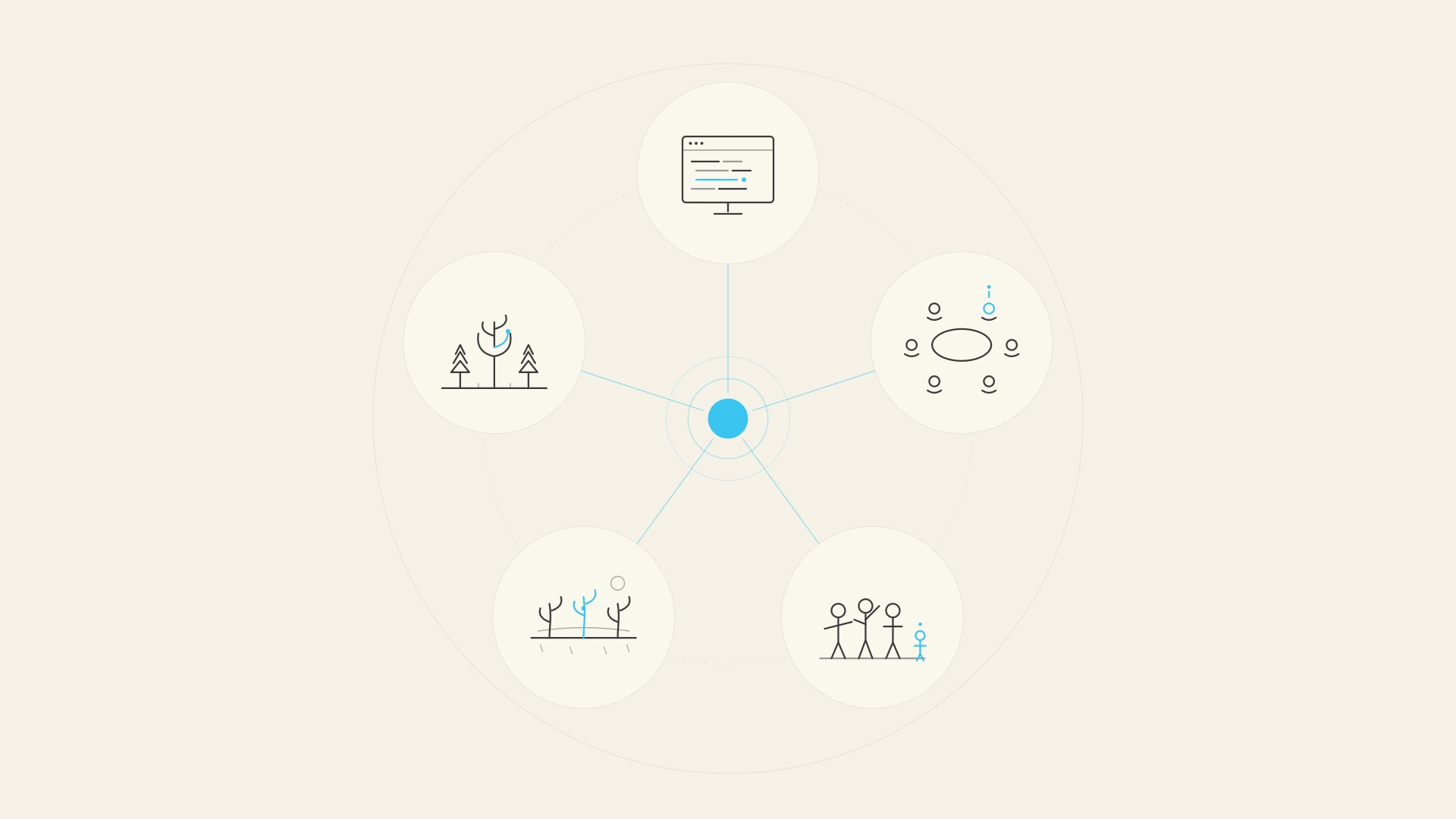
ソフトウェア開発者はコードをより注意深く読み、バグになっていたはずの小さな不整合に気づく。コードベースについての知識が通常、気づくことと見逃すことの違いを生むわけではない。違いは、一見して精査を必要としないように見える箇所に、注意が留まるかどうかだ。
CEOは会議の開き方を決める前に、部屋の温度を感知する。情報は全員にとって利用可能だった。それを登録して使う注意力が、自明になる決断と失敗する決断を分ける。
幼稚園の教師は、昨日とは異なる形で静かになっている子どもに気づく。明らかなことは何も起きていない。信号は見逃しやすいほど小さく、見逃すことには、より強い外的な手がかりがあれば防げたはずの結果がある。
農家は土壌と天候と作物の様子を、チェックリストではなく、一つの継続的なパターンとして読む。問題の早期の兆候はめったに単一の出来事ではない。何年もかけて変化を登録するよう訓練された注意を持つ人が、ほとんどの人が通り過ぎてしまうような、見落としやすいものの微妙な変化だ。
森林管理者は、他の誰にも明らかでない前に、ストレスを受けている木の早期の兆候に気づく。そのスキルは分類学的知識だけではない。気づき続ける能力だ。
これらはすべて同じ基礎的なスキルの事例だ。叫び求めていない信号への持続的な注意。どの分野でも重要なことのほとんどはそのカテゴリーにある。明らかなことは自ずと対処される。微妙なものには、知覚範囲がそれらに気づくよう訓練された誰かが必要だ。そして現代の生活において、この種の注意を意図的に訓練する分野は非常に少ない。外的成果よりも内的注意に向けられた身体教育は、その一つだ。
背後にある科学
Section titled “背後にある科学”ここで述べたのはこの取り組みの体験的な側面だ。研究側もある。そしてそれこそがAsia Shcherbakovaが登場するところだ。私たちは2015年に東京で出会った。彼女がスタジオで私たちとともに練習を始めて最初の一ヶ月後、Baseworksの成果を自然科学にマッピングする役割を担うリサーチアソシエイトとしてチームに加わることに同意した。それ以来、彼女の貢献には研究、教材の作成、そして実践を基礎となる科学に結びつける多くの記事が含まれている。その中の一つ、固有受容感覚の謎は、安静時の筋感覚の背後にある神経メカニズム、この知覚現象が実践者たちの間でいかに広く見られるかを示す元のサーベイデータ、そしてそれが固有受容感覚に関する既存の科学文献でほとんど名前がつけられていない構造的な理由を扱っている。
概念と研究を対面でもう少し深く掘り下げたいなら、二つの近日中の機会がある:
- 2026年5月11日、モントリオール。 Asiaが第27回神経心理学デーにてThe Neuro(モントリオール神経科学研究所)において発表する。彼女の講演は自由度制御と非習慣的な動きにおける予測可能な失敗パターンについて。無料・一般公開。
- 2026年6月8〜9日、イタリア・パドヴァ。 BRNet 2026において、身体表現研究コミュニティに向けて関連研究を発表する。
実践そのものを対面で体験するには、イベントページに近日中のセッションが掲載されており、Primerプログラムはこのメソッドに取り組む構造化された入口だ。
WordPress Metadata (Japanese)
Section titled “WordPress Metadata (Japanese)”Excerpt: ほとんどの身体実践は外側に向けられている——実践がどのように見えるか、何を達成するか。動きを行う内的体験が教育課程に含まれることはほとんどない。この記事では、内側に注意を向けるスキルを、安静時の筋感覚から始めて描写し、そのような感知力がどのようにあらゆる領域に持ち越されるかを探る。
SEOPress Title: 感知力という訓練できるスキル:身体認識と知覚スキル
SEOPress Description: 筋感覚への注意が、身体認識、固有受容感覚、そしてあらゆる領域で発達する知覚スキルをどのように育てるか。Patrick Oancia著。
SEOPress OG Title: 感知力という訓練できるスキル:身体認識と知覚スキル
SEOPress OG Description: 筋感覚への注意が、身体認識、固有受容感覚、そしてあらゆる領域で発達する知覚スキルをどのように育てるか。Patrick Oancia著。
Featured Image (Japanese)
Section titled “Featured Image (Japanese)”Title: 感知力という訓練できるスキル — 記事バナー(タイトルオーバーレイあり) Alt text: 「感知力という訓練できるスキル」— Patrick Oanciaによる記事バナー
Hero Image (Japanese)
Section titled “Hero Image (Japanese)”Alt text: BaseworksスタジオセッションでのPatrick Oancia。顔の前で腕を交差させるStar Formのポーズで膝をついており、前景と背景に2人の実践者が見える
In-Post Images (Japanese)
Section titled “In-Post Images (Japanese)”Seated attention photo: Alt text: Baseworksの練習セッション中、白いスタジオの床に座る4人。中央の黒いキャップをかぶった人物が、頭を下げ手を床に置き、意識を内側に向けてあぐらをかいて座っている。ピンクの帽子、オリーブ色のジャンプスーツ、紫のセーターを着た3人が、空間の中で同様の落ち着いた姿勢で座っている。
Attentional Carryover infographic: Alt text: 注意の転移:5つの領域——開発者、CEO、教師、農家、森林管理者——が、持続的注意という共通スキルを表す中央のシアン色の円に細い線でつながるラジアル図
Internal Link Audit
Section titled “Internal Link Audit”| English URL | Japanese URL Used | JA Available? |
|---|---|---|
https://baseworks.com/instructor/asia-shcherbakova/ | /ja/instructor/asia-shcherbakova/ | ✅ |
https://baseworks.com/article/what-you-cant-feel-you-cant-change-body-awareness-and-the-perception-gap/ | EN URL (no /ja/ version) | ❌ |
https://baseworks.com/article/the-mystery-of-proprioceptive-awareness/ | /ja/article/the-mystery-of-proprioceptive-awareness/ | ✅ |
https://baseworks.com/article/movement-training-micro-movement-gap/ | /ja/article/movement-training-micro-movement-gap/ | ✅ |
https://baseworks.com/article/baseworks-distributed-activation-the-m1-on-fire/ | /ja/article/baseworks-distributed-activation-the-m1-on-fire/ | ✅ |
https://baseworks.com/event/neuropsychology-day-2026-degrees-of-freedom-control/ | /ja/event/neuropsychology-day-2026-degrees-of-freedom-control/ | ✅ |
https://baseworks.com/event/brnet-2026-three-trainable-components-body-representation/ | /ja/event/brnet-2026-three-trainable-components-body-representation/ | ✅ |
https://baseworks.com/events/ | /ja/events/ | ✅ |
https://baseworks.com/primer/ | /ja/primer/ | ✅ |