
Life as Art: Music and Somatic Practice - New Transmission Episode
Sent: 2025-03-07 · Recipients: 223 · Campaign ID: 138
Pre-header: In this Conversation episode of the Baseworks Transmission podcast, Asia Shcherbakova talks with Johanna Calderon…
New Transmission Episode — Johanna Calderón
Section titled “New Transmission Episode — Johanna Calderón”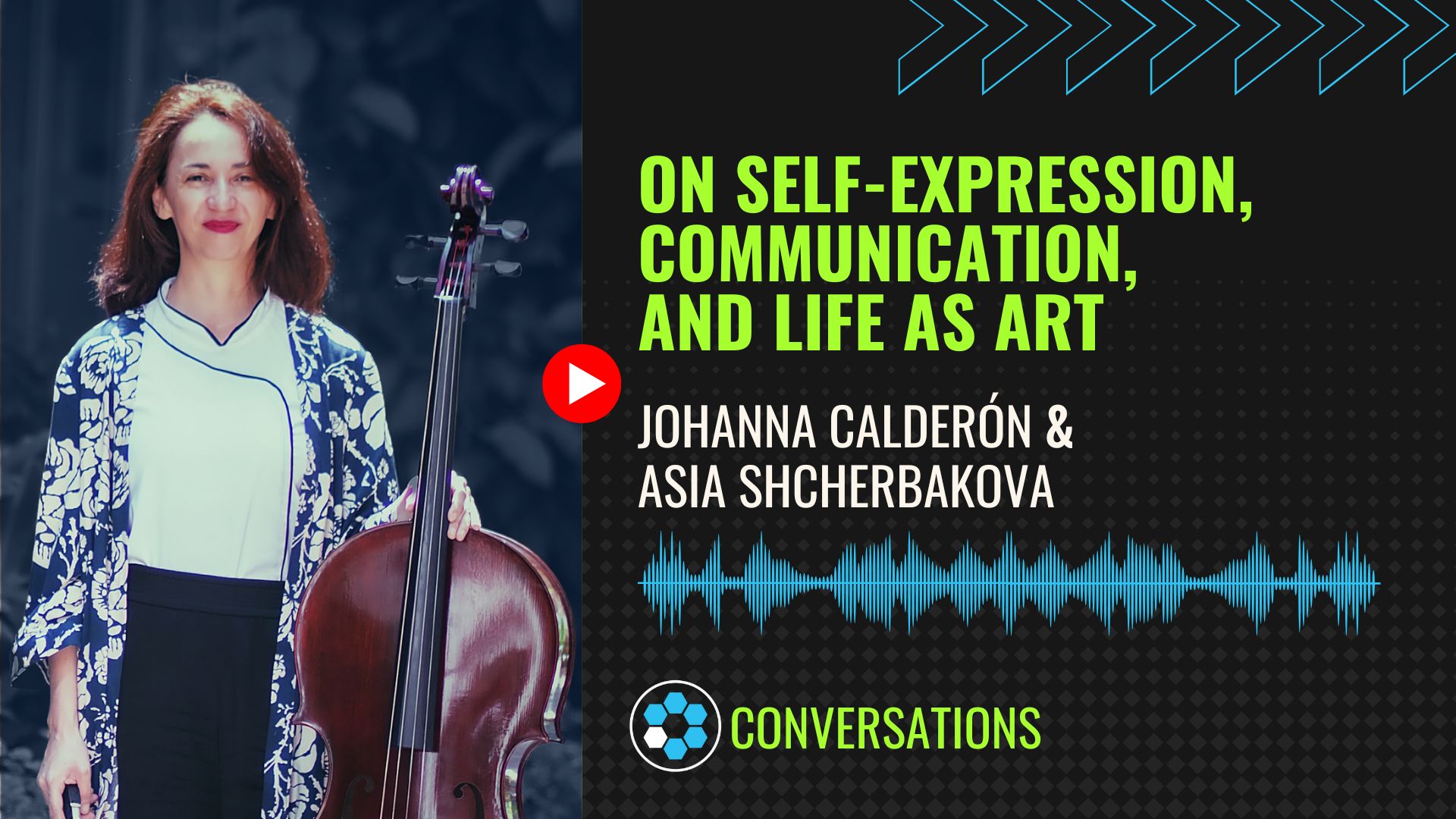
In this Conversation episode of the Baseworks Transmission podcast, Asia Shcherbakova talks with Johanna Calderon, an interdisciplinary researcher, educator, and music performer from Colombia.
The conversation traverses a wide array of interdisciplinary themes, from experiences and insights at the intersection of music and movement to Johanna’s experiences in musico-somatic healing practices as well as her own work in creating artistic spaces to facilitate communication and reconciliation for individuals affected by trauma and armed conflicts.
She articulates her evolution into a stage of life where she perceives life as art, suggesting that coherence and a feeling of life’s “aesthetic correctness” may outweigh the conventional ideals of “balance” and “harmony.”
As the episode was recorded in a mixture of English and Spanish, the video version on YouTube features subtitles in both languages (use the CC option to select your preferred language). If you’re not bilingual, we recommend watching the video with captions.
CTA: WATCH OR LISTEN
Alternatively, watch on YouTube, listen on Apple Podcasts or Spotify.
BRAIN FODDER — Music, Memory, and Reconciliation
Section titled “BRAIN FODDER — Music, Memory, and Reconciliation”
While specific brain areas handle duties like language or movement, there’s no single spot designated for music. That’s because listening to music activates the entire brain.
This widespread activation showcases music’s remarkable ability to evoke emotions, stir up memories, and create diverse experiences all at once. As a universal language, music provides a unique avenue for exploring memory and identity, aiding in reconciliation and healing processes.
Interestingly, when it comes to healing trauma, it’s not the soothing classical music that help the most. Research suggests that powerful cathartic experiences, facilitated by certain types of music, can yield the best results. Trauma is often stored in the body as unresolved stress, and cathartic activities — like dancing energetically, shouting, or drumming — help release that tension. In these cases, the music’s quality, which aligns with active motor system patterns and expressed emotions, holds the key to healing.
Conversely, when music is used as a tool to support reconciliation, it’s not necessarily the melody that bridges gaps between people. Those who have endured conflicts often find it difficult to connect with one another. A shared music-making experience can serve as a tool for rebuilding relationships. Using familiar instruments encourages collaboration, and it’s this co-creative process, rather than the music itself, that cultivates coexistence.
If music can facilitate such deep changes as healing and reconciliation, it’s not difficult to imagine the impact it can have on our everyday lives.
In contemplation: Have you ever tapped into music’s power beyond mere enjoyment or dancing?
This line of inquiry aligns with the principles of the Baseworks Method, which emphasizes perception as a central focus in the practice; when perception is stimulated, it can provide altitude and perspective.
Links Referenced
Section titled “Links Referenced”Translations
Section titled “Translations”Correlations
Section titled “Correlations”- asia-shcherbakova — Transmission host
Single-feature issue: Asia’s Transmission conversation with Johanna Calderón (Colombia) on music, somatic practice, and life-as-art. Bilingual recording (EN + ES) with CC subtitle option. Brain Fodder leans into music-and-memory research, extending the Colombia-connection thread started by Maria Lucía (campaign 93).