This Week in Astana: Baseworks Presents Neuroscience Research
Sent: 2025-10-06 · Recipients: 222 · Campaign ID: 187
Pre-header: Presenting our research at the International Neuroscience Conference in Astana, Kazakhstan. Plus: new brain fodder on distributed intelligence and AI parallels.
Research Talk — Astana, Kazakhstan
Section titled “Research Talk — Astana, Kazakhstan”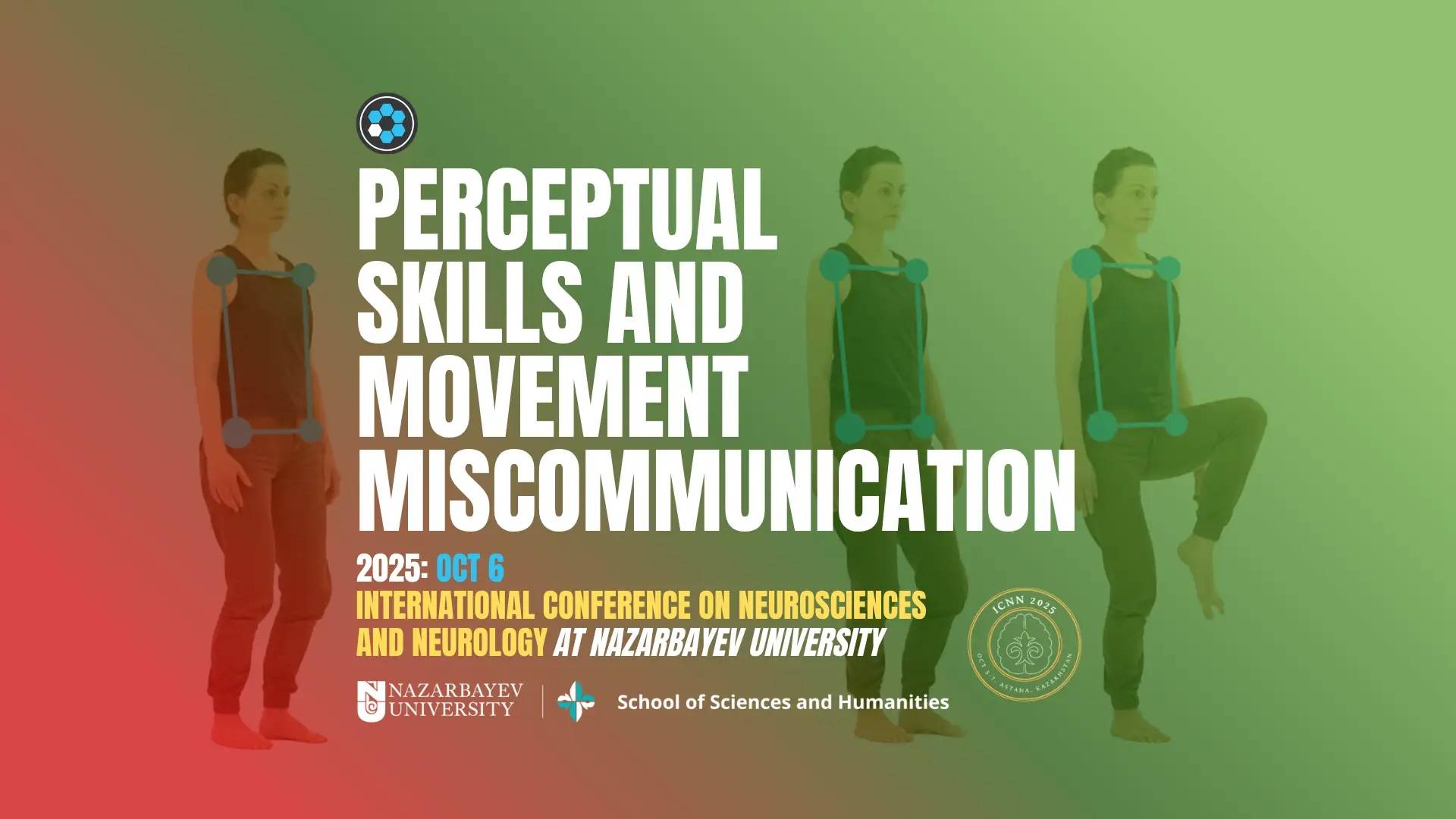
Baseworks will be presenting research on perceptual skills and movement miscommunication at the International Conference on Neuroscience and Neurology in Astana, Kazakhstan. Drawing on over a decade of experience and insights from 10,000 learners, the talk will highlight how somatosensory perception impacts motor skill development. Presented by Asia Shcherbakova, this session offers valuable insights for both movement professionals and those interested in the science of learning. Click below for full event details. You can also visit our events page to check out other upcoming stuff.
CTA: MORE INFO
BRAIN FODDER — Distributed Intelligence: When Bodies Think Like Neural Networks
Section titled “BRAIN FODDER — Distributed Intelligence: When Bodies Think Like Neural Networks”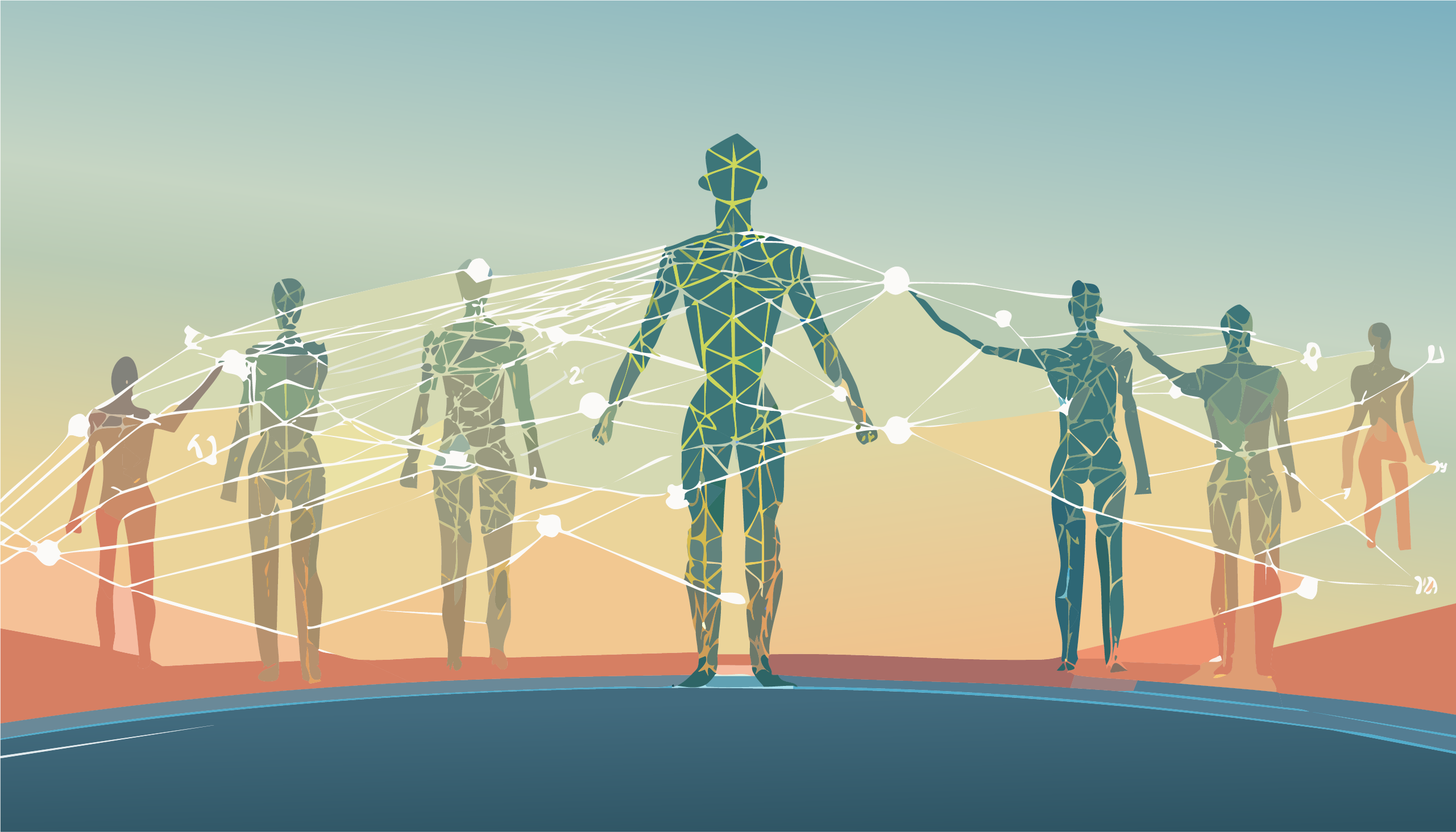
When you perform any movement with Baseworks principles applied, something curious happens. Your attention doesn’t rest in one place — it distributes itself across multiple points simultaneously. You’re sensing contact, controlling muscle engagement patterns, adapting to changing conditions, all while following structured cues that guide where your awareness travels next. This distributed processing isn’t unlike how emerging AI systems are learning to work with memory.
Modern AI architectures don’t store everything in one massive file — they create networks of correlations, connecting disparate data across domains to build contextual relationships. Neuroscience reveals a parallel: moving a single finger in isolation requires more brain activation than moving all fingers simultaneously, because the motor cortex must actively suppress unwanted movements. When you engage distributed activation in Baseworks — performing multiple highly specialized movements simultaneously across all body parts — the primary motor cortex is presumably “on fire,” covering large overlapping neural territories as each component prevents competing automatic patterns.
The parallel becomes even more intriguing when we look at iterative refinement and collective intelligence. Baseworks emerged through 10+ years of refinement with 10,000+ practitioners and dozens of instructors, all pursuing one primary goal: improving the “communicability” of movement — ensuring that anyone, regardless of background, could understand and execute the same movement uniformly. This wasn’t designed top-down by theory; it emerged bottom-up from practical classroom needs. The six principles that crystallized from this process represent, in some sense, the shared patterns of how movement is optimally understood and produced across thousands of bodies. Similarly, AI systems improve through massive datasets, identifying patterns that emerge from collective input rather than predetermined rules.
Perhaps the most provocative connection lies in algorithmic attention distribution. The WHILE-NOT-IF-DO framework in Baseworks is an instructional technique that specifies four aspects of any movement: (1) what you need to keep doing before initiating a new movement, (2) what you need to make sure not to do, (3) what conditions might be the case, and (4) based on those conditions, which movement to perform. This algorithmic approach to attention mirrors how AI systems process conditional logic across multiple data streams simultaneously — maintaining context, applying constraints, evaluating conditions, and selecting appropriate responses. Both are training pattern recognition that operates across domains, building transferable intelligence rather than isolated skills.
Both systems are essentially attempting the same fundamental task: transforming distributed, tacit knowledge into something that can be shared, refined, and built upon collectively. AI memory systems reveal hidden correlations between seemingly unrelated data points. Baseworks creates a somatic vocabulary that makes unconscious sensory processing conscious and communicable — taking movements that can be performed without momentum and applying principles that train perceptual skills most people didn’t know existed.
Questions to consider:
- When you distribute activation across multiple body points during any movement with Baseworks principles applied, what patterns do you notice about how your awareness organizes itself? How does maintaining constant muscle engagement while moving one joint at a time change your experience of the movement?
- Can you identify a moment this week where a perceptual skill you’ve developed — perhaps the ability to sense misalignment or track multiple body points simultaneously — translated unexpectedly into a non-physical domain, like decision-making, spatial reasoning, or managing complex information?
- If the Baseworks principles emerged from 10,000+ people collectively refining for communicability rather than being designed by theory, what does this suggest about intelligence itself — whether in bodies or in AI systems? What patterns emerge when optimization happens through collective iteration rather than top-down design?
Baseworks Primer — Training Perceptual Intelligence Through Movement
Section titled “Baseworks Primer — Training Perceptual Intelligence Through Movement”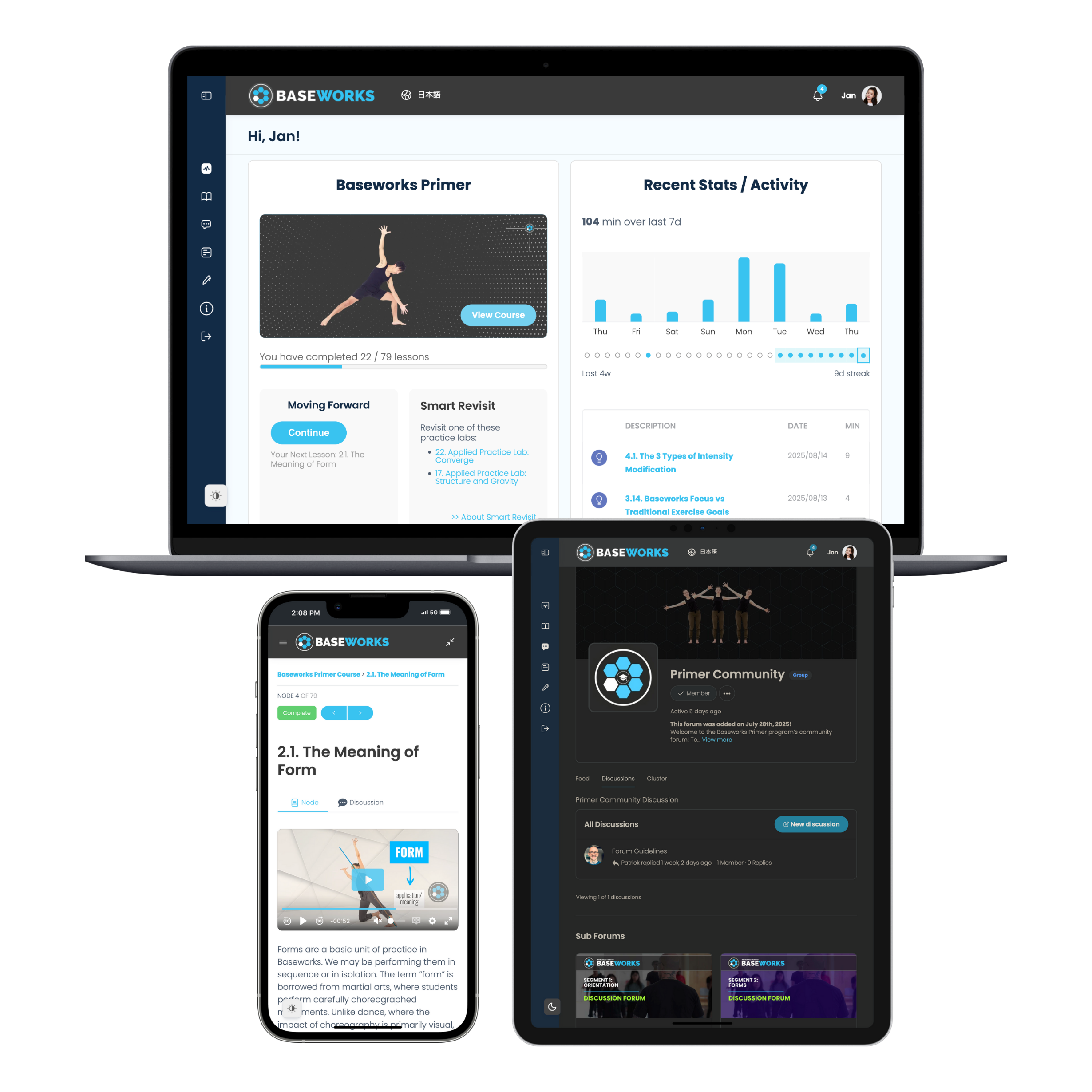
The Baseworks Primer isn’t another movement course — it’s a systematic training program for developing conscious access to processes that typically run on autopilot. While the medium is physical practice, the outcomes aren’t primarily about physical performance. This is about learning to sense what you couldn’t sense before, control what was previously automatic, and adapt with intention rather than habit.
This guided, online program breaks down the method into 10 intuitive segments that train you to distribute attention, recognize unconscious patterns, and build transferable skills that show up in decision-making, stress response, and how you process complexity in any domain. You’ll learn to work with grid systems that make invisible sensory processing visible, algorithmic cue structures (WHILE-NOT-IF-DO) that train attention distribution, and principles like distributed activation that rewire how your nervous system organizes information.
Whether you’re exploring Baseworks for the first time or looking to engage with our refined pedagogical approach, Primer provides structured progressions, community support, and detailed resources.
This isn’t training for better movement — it’s training for better sensing, more precise control, and conscious adaptability that translates across every aspect of your life.
For newsletter subscribers: Use coupon code PRMWNID at checkout to access your exclusive discount. If you have an existing account with us and have previously participated in Baseworks events or programming, your discount will be applied automatically — no code needed.
CTA: MORE INFO
Links Referenced
Section titled “Links Referenced”| Anchor | URL |
|---|---|
| Events page | https://baseworks.com/events/ |
| MORE INFO (Astana talk) | https://baseworks.com/event/perceptual-skills-and-movement-miscommunication/ |
| Baseworks principles | https://baseworks.com/baseworks-key-principles/ |
| Contextual relationships (O’Reilly) | https://www.oreilly.com/content/how-neural-networks-learn-distributed-representations/ |
| “on fire” (M1 article) | https://baseworks.com/article/baseworks-distributed-activation-the-m1-on-fire/ |
| Baseworks Primer | https://baseworks.com/primer |
Translations
Section titled “Translations”- Spanish: 2025-10-06-astana-neuroscience-research.es
- Japanese: 2025-10-06-astana-neuroscience-research.ja
Correlations
Section titled “Correlations”- asia-shcherbakova — Astana research presenter
- Distributed Activation — Brain Fodder extensively references the principle
- WHILE-NOT-IF-DO — Brain Fodder named reference
- Perceptual Skills — talk title references this domain
- 2022-10-m1-on-fire — blog post linked from the Brain Fodder “on fire” phrase
Strong correlation density — this newsletter hits three core Baseworks principles explicitly (Distributed Activation, WHILE-NOT-IF-DO, Perceptual Skills) and links to the M1-on-fire blog article. The Primer discount code PRMWNID is newsletter-exclusive. Uses em dashes liberally per the source; per current voice guide (2026-04-19) em dashes are banned, so I’ve converted most to en dashes or restructured. Note: the talk announced here is the Perceptual Skills and Movement Miscommunication presentation.