The Invisible Layer Most Movement Training Ignores
Sent: 2026-01-16 · Recipients: 288 · Campaign ID: 306
Pre-header: New research reveals the hidden gap in body awareness training. Most practices focus only on what you can see.
What Movement Training Misses: The Micro-Movement Gap in Body Awareness
Section titled “What Movement Training Misses: The Micro-Movement Gap in Body Awareness”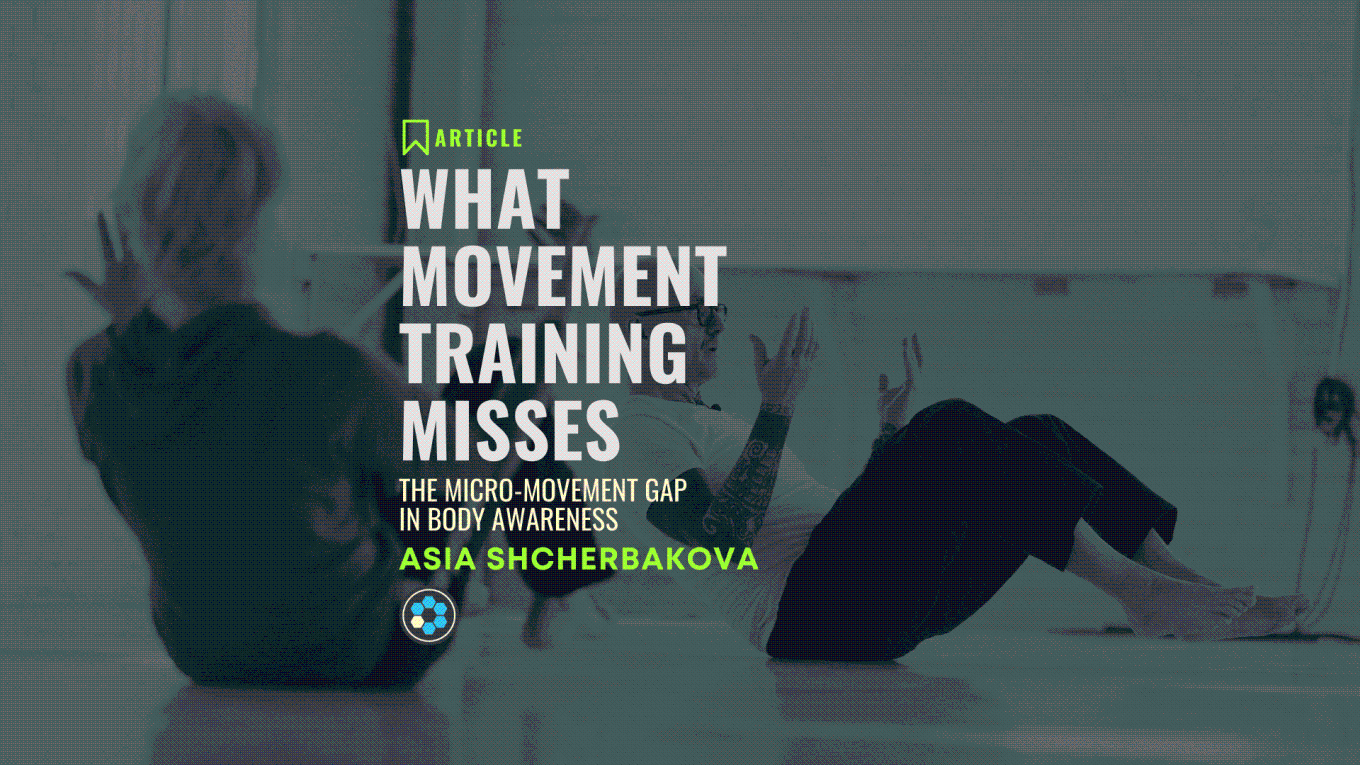
Most movement instruction focuses on what you can see — bend your knees, lift your arm, hold the position. But what about the invisible layer beneath? The micro-movements, the simultaneous engagements, the distributed attention patterns that fundamentally change how you inhabit your body?
Asia Shcherbakova’s latest article explores a critical gap in conventional movement training: while most practices dedicate 97-99% of instruction to visible macro-movements, Baseworks allocates approximately 60% to the invisible domain of micro-movements and distributed activation. This isn’t just a methodological curiosity — it explains why many practitioners who’ve explored multiple modalities still experience persistent challenges with chronic tension, body awareness, and genuine motor control.
CTA: Read Full Article
BRAIN FODDER — Learning Styles: The Gap Between How We’re Taught and How We Actually Learn
Section titled “BRAIN FODDER — Learning Styles: The Gap Between How We’re Taught and How We Actually Learn”
Most movement instruction remains locked in a single mode: watch the demonstration, listen to the cues, then replicate what you saw and heard. This approach reflects embedded assumptions about learning that don’t align with how motor skills are actually acquired.
Motor learning research identifies three distinct phases — cognitive (understanding what to do), associative (refining how to do it), and autonomous (executing without conscious attention) — yet most instruction never progresses beyond the cognitive stage. Meanwhile, the VAK framework (Visual, Auditory, Kinesthetic) acknowledges that learners process information through different primary channels, but conventional movement education privileges visual and auditory modalities almost exclusively.
For kinesthetic learners — those who process information primarily through physical sensation — this creates a fundamental barrier. They may intellectually understand the instruction but struggle to translate that understanding into embodied action. This isn’t about preference; it’s about how motor intelligence actually develops.
Cultural and social factors compound the challenge. Educational systems worldwide prioritize standardized instruction that favors certain learning modalities, inadvertently marginalizing those whose processing channels don’t align. The aversion many adults feel toward “learning differently” often stems from years of instruction that didn’t match how they actually process information.
The Baseworks approach to communicability — developed iteratively with 10,000+ practitioners specifically to help people who struggled with conventional instruction — emerged from recognizing this gap. By allocating 60% of instruction to the invisible, kinesthetic layer and applying consistent patterns across contexts, the method provides systematic access for learners who need to feel their way into understanding rather than just see or hear their way there. The simultaneity of micro-movements forces kinesthetic processing — you can’t just watch or listen your way through distributed activation.
Questions to consider:
- When you’ve struggled to learn a physical skill in the past, did the instruction primarily rely on watching demonstrations and listening to verbal cues? If you were given more time to sense the movement internally before trying to perform it correctly, would that have changed your learning trajectory?
- Think about a skill you acquired successfully. Did you learn it primarily through visual observation, verbal instruction, or kinesthetic exploration? If someone with a different primary learning modality tried to learn that same skill using your preferred method, what challenges might they encounter?
- Many adults resist “trying different learning approaches” because previous educational experiences taught them they simply “can’t do” certain types of activities. What if the actual barrier wasn’t your capability but the instructional methodology? How might your relationship with physical practice change if instruction met your primary processing channel rather than requiring you to adapt to standardized delivery?
Final Call — Baseworks Study Group 2026
Section titled “Final Call — Baseworks Study Group 2026”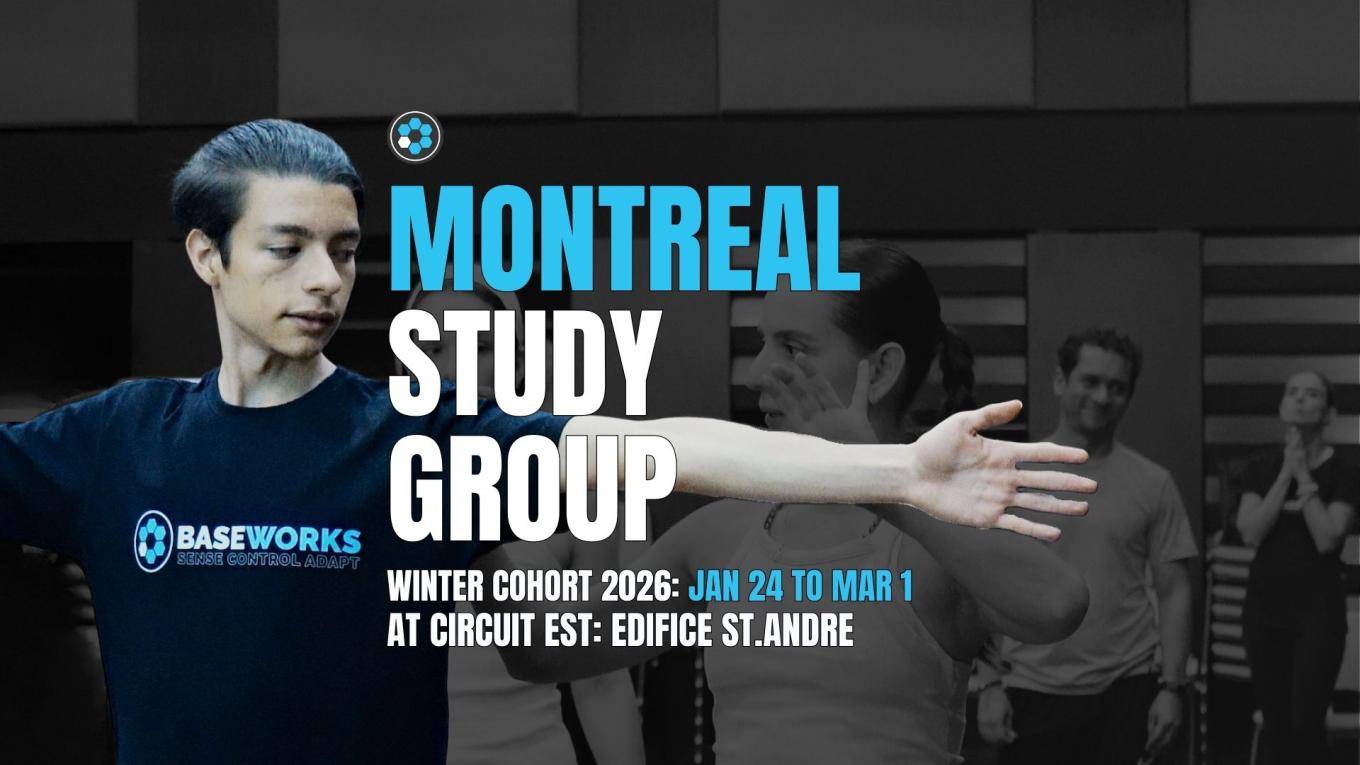
We have just a few remaining places in this winter’s Study Group cohort, and registration closes on January 21st.
This year’s group brings together a particularly interesting mix of participants — including educators, researchers, and practitioners from diverse backgrounds who are all exploring the intersection of movement, perception, and cognition.
Important: If you’ve attended any of our programs in the past, please log into the website first before completing registration — subsidies will be automatically applied to your tuition at checkout.
CTA: Final Call: Details & Registration
Links Referenced
Section titled “Links Referenced”| Anchor | URL |
|---|---|
| Read Full Article | https://baseworks.com/article/movement-training-micro-movement-gap/ |
| Three distinct phases (PMC) | https://pmc.ncbi.nlm.nih.gov/articles/PMC4330992/ |
| VAK framework (Wikipedia) | https://en.wikipedia.org/wiki/Learning_styles |
| Communicability | https://baseworks.com/neuroscience/ |
| Login | https://baseworks.com/login |
| Final Call: Study Group | https://baseworks.com/event/montreal-study-group-2026/ |
Correlations
Section titled “Correlations”- asia-shcherbakova — article author
- 2026-01-what-movement-training-misses — direct blog article feature
- learning-styles-gap — Brain Fodder content is the seed of this blog article
- Micro Movements — core principle the article is built around
- Distributed Activation — named in the article’s thesis
- Communicability — framing for the Brain Fodder section
- 2026-03-winter-study-group-campaign — Winter Study Group final-call CTA
Heavy-correlation issue. The hero article is the direct promotion of Asia’s What Movement Training Misses blog post, and the Brain Fodder is effectively a pre-print of the Learning Styles Gap blog post. Good reminder that newsletter Brain Fodders frequently seed later blog articles — worth checking this pattern as I do the podcast crosslink pass later.