
Beyond the Body: Exploring the Intersection of Movement and Cognition
Sent: 2024-11-27 · Recipients: 172 · Campaign ID: 115
Pre-header: How does the intersection of movement, cognition, and perception shape our experience of the world? Explore the complex inter…
Disembodied by Dance — When Art Hooks an Embodied Mind
Section titled “Disembodied by Dance — When Art Hooks an Embodied Mind”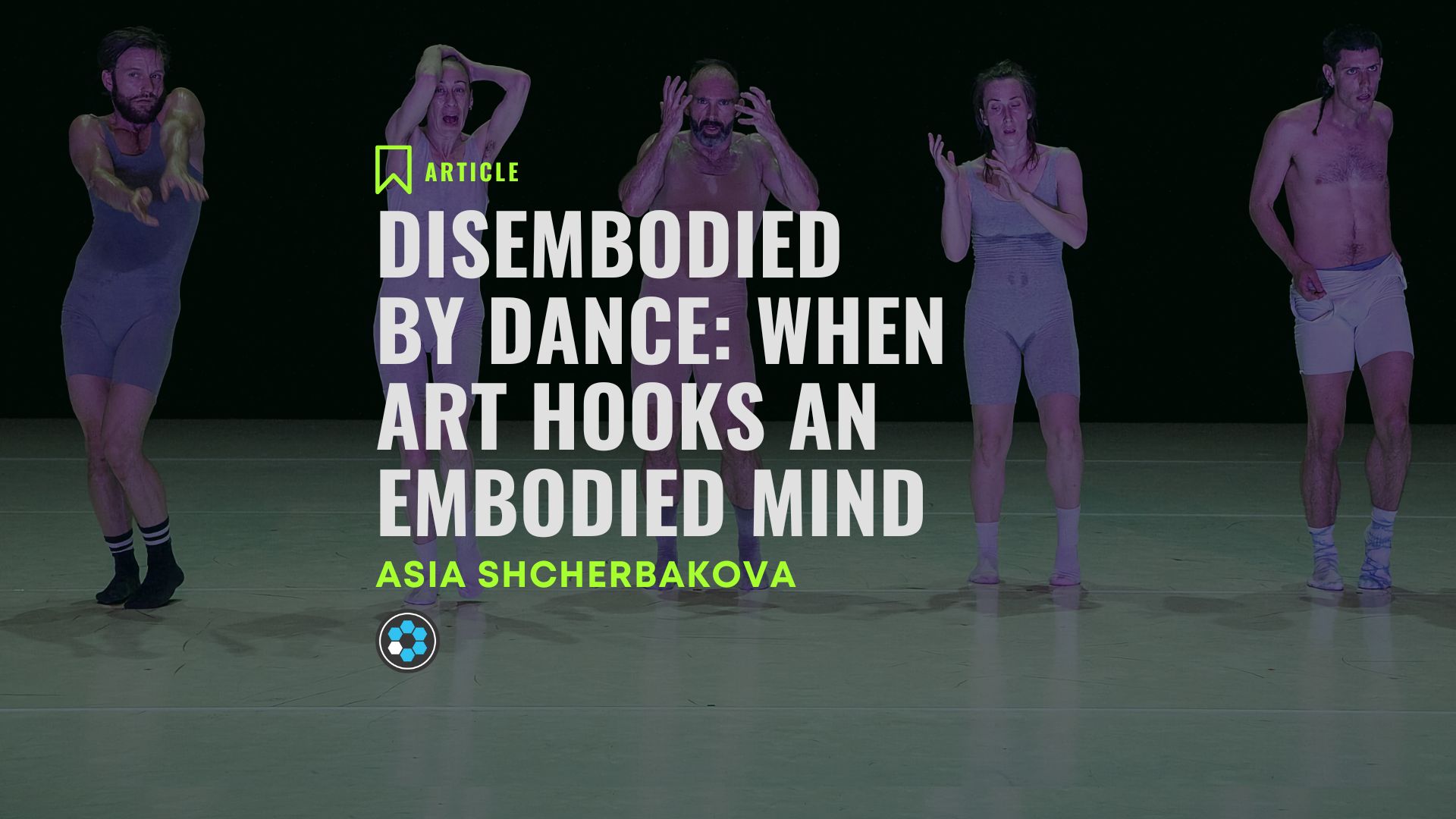
In a thought-provoking exploration of the intersection of movement and cognition, Baseworks co-developer Asia Shcherbakova shares her unexpected experience of “disembodiment” during a contemporary dance performance in her latest article. The performance, Les jolies choses by Catherine Gaudet, challenged Asia’s perceptions and led to a temporary feeling of disembodiment, where her bodily sensations, thoughts, and emotions faded away. This experience was not a result of a meditative state or a deliberate attempt to dissociate, but rather an unintentional response to the performance’s unique cognitive demands.
The article examines the nuances of this encounter, exploring our concept of “Nouveau Regard,” or the experience of altered perception of something once familiar. It also delves into the science behind the performance’s impact, discussing the mechanisms behind our capacity for imitation and the role of mirror neurons in simulating movements observed in others.
Through a detailed analysis of the performance and its effects, the article sheds light on the complex interplay between movement, cognition, and perception. It highlights the power of art to challenge our perceptions and push us out of our habitual ways of experiencing the world.
This article will be of interest to anyone fascinated by the intersections of movement, cognition, and perception. It invites readers to reflect on the fluidity of normal perception and how it can be influenced by unique cognitive challenges posed by art. Whether you’re a dancer, a cognitive scientist, or simply someone interested in the human experience, this article is sure to spark new insights and perspectives.
CTA: READ ARTICLE
Open Day — Montréal
Section titled “Open Day — Montréal”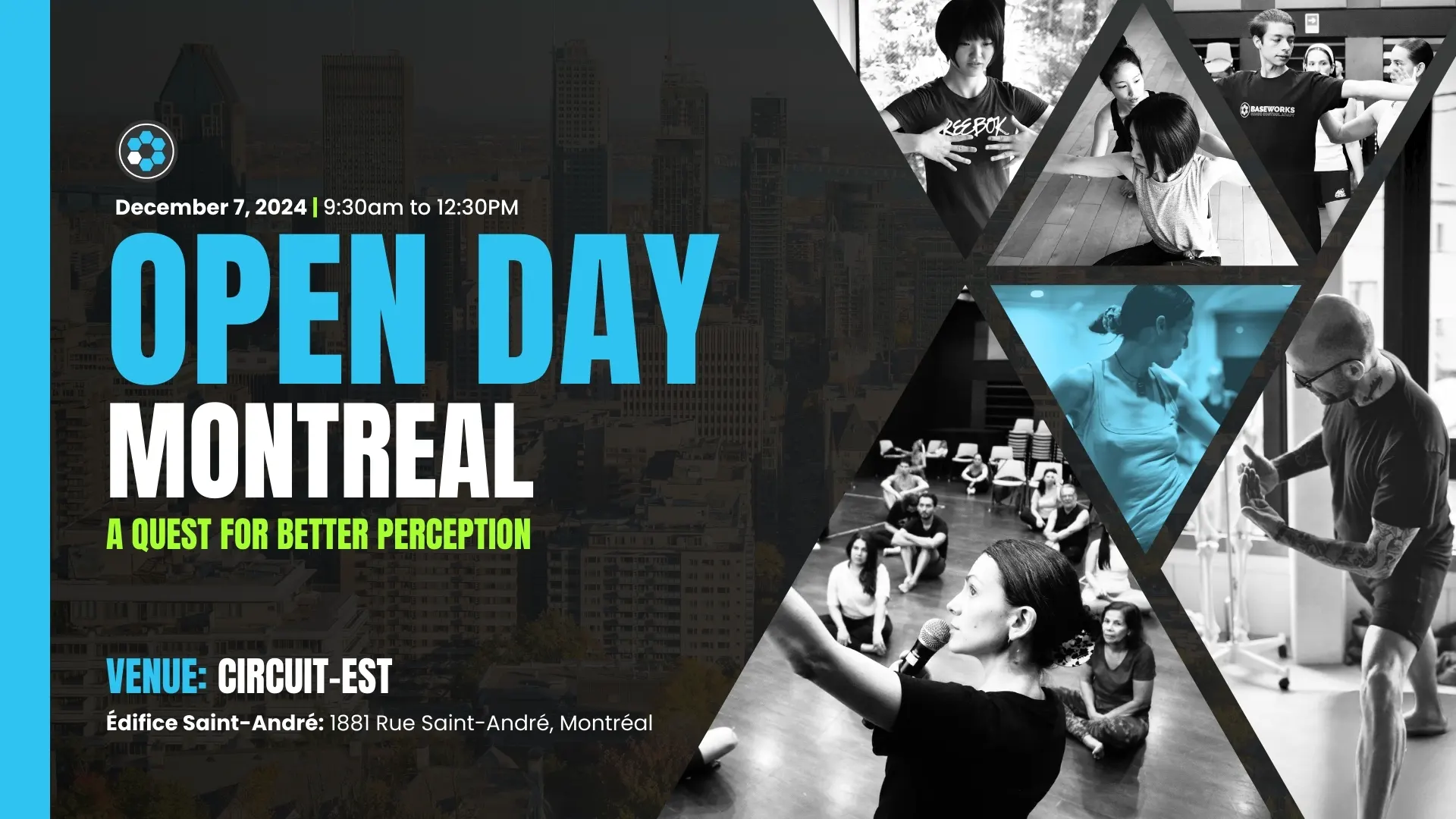
We’re hosting a gratis Open Day to introduce the Baseworks Method. The event will combine practical movement exercises with theoretical insights into the interconnectedness of perception, action, and creative thinking.
The Open Day will take place at Circuit-Est, a venue with a long history of supporting movement research and artistic exploration. We’ve chosen this location because its focus on accessibility and meaningful learning experiences in movement awareness aligns with our own values.
The event is designed to be a community-focused introduction to the Baseworks Method, and is open to anyone interested in the intersection of movement, cognition, and professional development. We invite you to join us to learn more about the method and connect with others who share your interests.
CTA: MORE INFO/RSVP
Registration is required for this free event due to limited space and to confirm participation terms. We are not accepting any walk-in registrations on the day of the event. RSVP to attend.
BRAIN FODDER — Resonant Perception
Section titled “BRAIN FODDER — Resonant Perception”
Altered states of perception, akin to flow state experiences, can be evoked by witnessing performances that captivate and immerse the viewer. This phenomenon is rooted in the concept of “embodied cognition,” which, as Francisco Varela and his colleagues have argued, posits that cognitive processes are deeply rooted in bodily experiences. When witnessing a performance, the viewer’s body and mind become attuned to the rhythms, movements, and emotions expressed by the performers, leading to a blurring of boundaries between self and other.
Research on flow states, also known as being “in the zone,” has shown that this mental state is characterized by heightened focus, concentration, and a sense of automaticity, as Mihaly Csikszentmihalyi has described. Similarly, witnessing a performance can induce a flow-like state, where the viewer becomes fully engaged and immersed in the experience. This can be attributed to the brain’s default mode network (DMN) being suppressed, allowing for a more direct and unmediated experience of the performance, as Randy Buckner and his colleagues have found.
In the context of performance and art, this altered state of perception can be seen as a form of “intersubjective resonance,” where the viewer’s subjective experience is harmonized with the performer’s, as Vittorio Gallese has argued. This resonance can lead to a deeper understanding and appreciation of the performance, as well as a sense of connection with the performer and the artwork.
The Baseworks Method focuses on cultivating this kind of intersubjective resonance by supplementing movement practice with theoretical insights into the connection between action and perception to develop a more nuanced understanding and control of the complex relationships between body, mind, and environment.
Have you ever felt an altered sense of connection and resonance with a performance or artwork? Share your stories and insights with us at ideas@baseworks.com.
Upcoming Events
Section titled “Upcoming Events”Looking ahead to 2025/2026: US, Europe, South America and Asia. To stay informed about all our upcoming events, please subscribe to our program RSS feed, regularly visit our events page, or look out for future email announcements.
Links Referenced
Section titled “Links Referenced”| Anchor | URL |
|---|---|
| READ ARTICLE (Disembodied by Dance) | https://baseworks.com/article/disembodied-by-dance-embodied-mind/ |
| MORE INFO/RSVP (Open Day) | https://baseworks.com/mtl-open-day/ |
| RSS feed | https://feeds.feedburner.com/baseworks/9U9WQ9midXj |
| Events page | https://baseworks.com/events/ |
Correlations
Section titled “Correlations”- asia-shcherbakova — article author, featured throughout
Single-author issue: Asia’s article on the Catherine Gaudet performance and the cognitive framing for the December 2024 Montreal Open Day. Strong scientific framing (Varela / Csikszentmihalyi / Gallese) typical of the method’s research-adjacent voice. Also the immediate precursor to the follow-up open-day program comms (campaigns 119, 121 — archived separately). Note: campaign 116 is the near-duplicate send to a smaller segment (32 vs 172) and per the inventory is skipped.