
Unraveling Movement: Biological Systems and the Art of Self-Creation
Sent: 2024-11-01 · Recipients: 173 · Campaign ID: 99
Pre-header: Movement, biological systems, and autopoiesis. Discover connections between Baseworks, Fighting Monkey, and creative expression.
New Transmission Episode — Jozef Fruček Reflection
Section titled “New Transmission Episode — Jozef Fruček Reflection”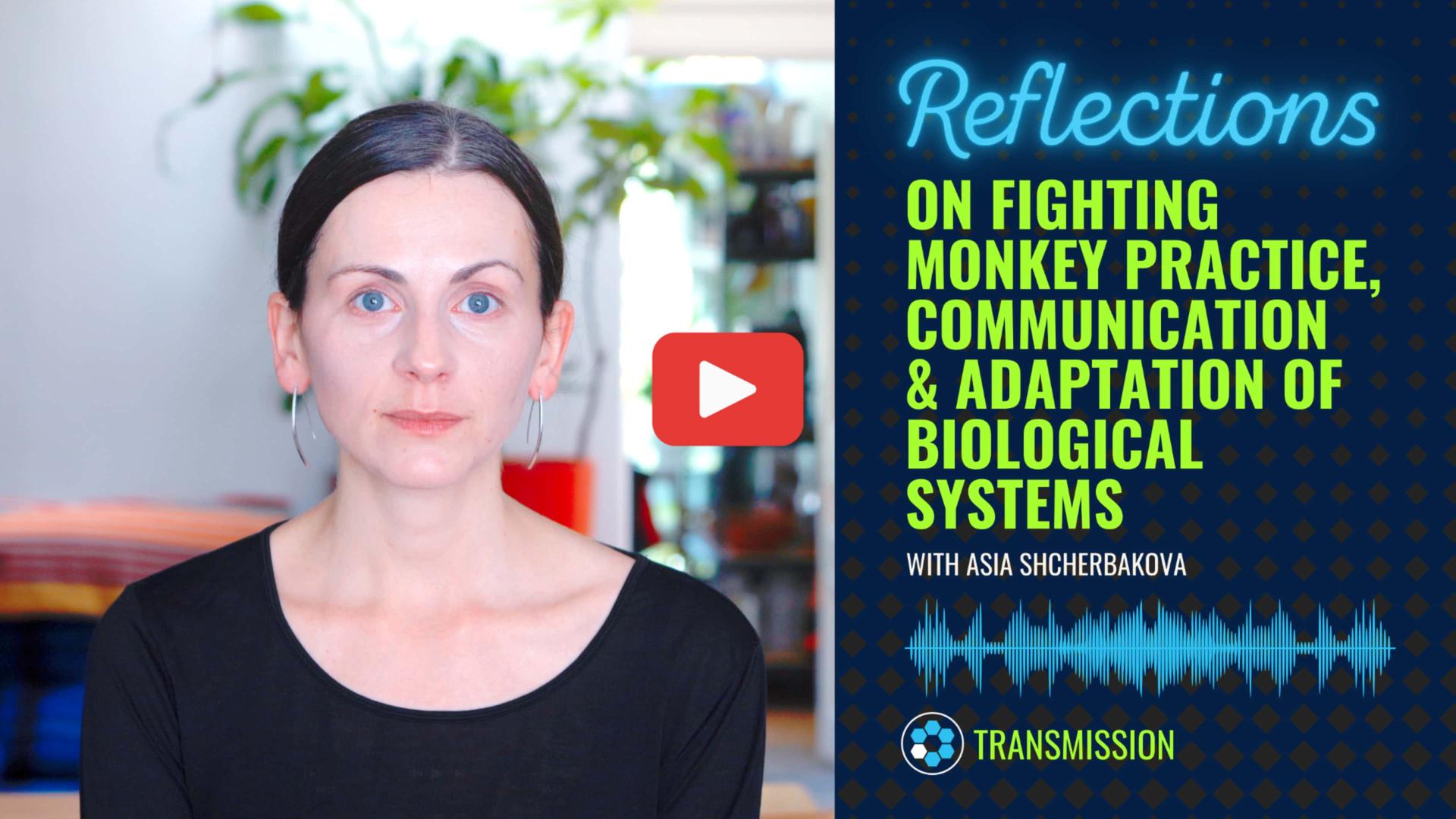
In this deep dive Reflection, Baseworks Method co-developer Asia Shcherbakova explores Jozef Frucek’s approach to movement practice, examining how he integrates concepts of biological systems and communication within the context of Fighting Monkey. Asia aligns this approach with the Baseworks Method, drawing thoughtful comparisons and connections, including topics such as linguistic analogies, the quality of frustration, perception-action loops, and more!
We really recommend watching this, as there is a lot of visual references to the models that are introduced throughout the reflection.
CTA: WATCH OR LISTEN
Alternatively, watch on YouTube, Spotify, or Apple Podcasts.
BRAIN FODDER — Autopoiesis and Self-Creation
Section titled “BRAIN FODDER — Autopoiesis and Self-Creation”
Living systems are cognitive systems, and living as a process is a process of cognition.
What is life? This age-old question has engaged thinkers for centuries. Addressing this, Chilean biologists Humberto Maturana and Francisco Varela introduced “autopoiesis” in the 1970s. Meaning “self-creation,” autopoiesis defines life as a process where systems — be it cells or organisms (including any one of us) — maintain and regenerate themselves autonomously. This concept highlights how living systems are inherently self-sustaining, drawing boundaries between themselves and the chaos of the external world.
But like any profound idea, autopoiesis soon permeated beyond its original context, finding its way into artistic expression, including movement and dance. In the realm of performance arts, autopoiesis offers a frame to understand how dance not only expresses life but embodies it. Just as living systems generate their own pathways, dancers navigate and construct their own expressive spaces, transforming the abstract into a tangible expression of self-renewal and presence.
In this sense, each performance is an act of autopoiesis — a cyclical journey where movement emerges, evolves, and redefines the boundaries of expression. Dancers, like living cells, become self-generating systems, filling their environment with meaning through deliberate practice and interaction. The dance floor becomes not just a stage but a microcosm of life — an arena where the art of self-creation is in perpetual motion.
Do you think the concept of autopoiesis might apply to your own experiences in movement or creativity? Share your thoughts with us at ideas@baseworks.com.
Links Referenced
Section titled “Links Referenced”| Anchor | URL |
|---|---|
| WATCH OR LISTEN | https://baseworks.com/podcast/reflections-fighting-monkey-communication-adaptation-biological-systems/ |
| YouTube | https://youtu.be/pgT9xoUmyWI |
| Spotify | https://open.spotify.com/episode/4wfQmM9h3RRZH4XTGuxBvE |
| Apple Podcasts | https://apple.co/4hlXuQJ |
| Humberto Maturana (Wikipedia) | https://en.wikipedia.org/wiki/Humberto_Maturana |
Correlations
Section titled “Correlations”- asia-shcherbakova — author of the Fighting Monkey Reflection
Short, single-topic issue: Asia’s Reflection on Jozef Frucek’s Fighting Monkey episode (parallel to the 2024-02-21 Ryan Hurst reflection format), paired with a Brain Fodder on Maturana/Varela’s autopoiesis. Leans philosophical — no event CTAs, no Practice Platform push.